Certainty Comes From Curiosity. The Best Leaders Ask Questions.
Jun 15, 2026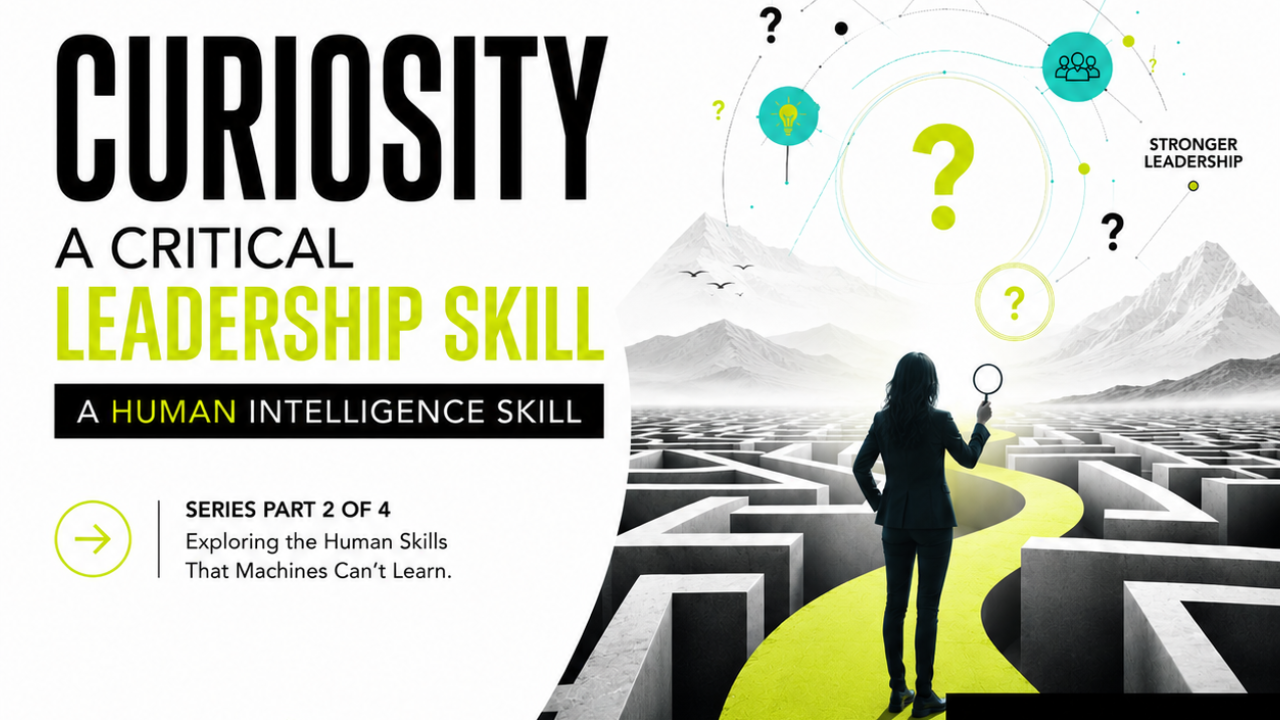
|
Certainty is a strength. You need to project it when you're instilling presence. (Learn more about Presence in this video.) The challenge to certainty is that we rarely have absolute certainty. As leaders we cobble together data, insights, feedback, experience and instinct in order to set our strategy, goals, actions and decisions. Where we can get into trouble is when we believe we know all the answers, when we stop inviting perspectives and points of view. Brené Brown and Adam Grant launched a podcast called The Curiosity Shop. The premise: when our whole culture rewards fast, black and white answers, we stop thinking. We get siloed. We quit exploring anyone else’s perspective. AI speeds it up. We type a prompt, take the obvious answer, and move on. It is this narrow, inflexible approach to certainty that limits us. And that's where curiosity comes in. Curiosity is a Human Intelligence skill. It’s one of the capabilities that keeps a leader UnMachined℠ in the age of AI, able to lead because they've honed the skills that no algorithm can replicate. Certainty Without Curiosity Costs You In part one of our Mini but Mighty℠ series on Curiosity, we looked at Nokia. A company that led the market, set a direction, and then refused to question it. The data pointed somewhere else. They ignored it. They stopped asking what if the market is changing faster than we think. We know how that ended. Being certain of your strategy means having the strength to test it, to question it, to seek contrarian perspective. When you explore another perspective, you hold a stronger position and you build more trust within your organization to implement strategy precisely because you've stress tested it. The Three Modes: Prosecutor, Politician, Scientist In Think Again, Adam Grant describes three modes we fall into when our beliefs get challenged. Prosecutor mode: you try to prove the other person wrong. Politician mode: you say whatever earns approval from the people with power in the room. Scientist mode: you treat your own idea as a hypothesis worth testing, and you do the same with theirs. An UnMachined℠ leader and their team operate in scientist mode. We explore ideas, not identities. We get curious, and curiosity builds opportunity, innovation, and trust. We catch ourselves sliding into prosecutor or politician mode, and we choose differently. And this approach helps you not only in work and business, but in life and in relationships, including co-workers, partnerships, colleagues and clients. Curiosity Before Defensiveness Brené Brown and Adam Grant had a professional falling out years ago. They cover it in the first podcast episode. The reason it matters is not the gossip. It’s that this happens to all of us. We decide someone meant us harm. We get defensive. We waste days on “I can’t believe” and “I assumed.” Then we get curious, engage, and learn we had the wrong filter the whole time. So the next time you feel annoyed, misunderstood, or sure you are right, get curious first. Ask what beliefs you brought to the table. Ask what the other person actually intended. You might keep your position and change the room. You might walk away with a new perspective. Either way, you led like a Boss. Watch this week’s 2nd episode on Curiosity: Mini but Mighty℠ Leadership Lesson on YouTube. If you lead a company and you want this kind of thinking developed across your managers and leaders, you'll want to know about the Helm Leadership Essentials. Connect with AK at bossatthehelm.com. Start with yourself. Lead yourself. Then lead others. Be a Boss. |
Stay connected with news and updates!
Join our mailing list to receive the latest news and updates from our team.
Don't worry, your information will not be shared.
We hate SPAM. We will never sell your information, for any reason.
